Embark on another exciting journey to the far corners of the Earth while exploring the breathtaking natural marvels that define the power and beauty of our planet
This is the third instalment in our four-part series exploring the Seven Wonders of the World in their various forms, following our previous deep dives into the ancient wonders that shaped civilisation and the modern wonders that celebrated human ingenuity and creativity
The word “wonders” often sparks thoughts of grand structures built by human hands. In our previous two blogs that touched on the topic of wonders, we explored how many human creations warrant our admiration, yet, beyond the reach of human design, nature herself has crafted several masterpieces that surpass even our wildest imagination. These natural phenomena, which are each as truly spellbinding as the last, are the wonders that remind us of our place in the world and the majesty of the planet we call home.
In this Seven Wonders series, we are celebrating both the creations of humankind and the artistry of nature. In our previous blogs, we looked at the ancient wonders that defined the dawn of civilisation and the modern wonders that reflected human creativity and progress. Now, we turn to nature’s unique canvas, uncovering a realm where time, elements, and evolution have combined to produce awe-inspiring beauty.
The Natural Wonders of the World
The Seven Natural Wonders of the World represent Earth’s most breathtaking and diverse creations. There are many natural masterpieces to be found across the globe, like the luminous Aurora Borealis that lights up the polar skies and the mighty Victoria Falls that roars between Zambia and Zimbabwe. These sites are powerful reminders of the forces that have sculpted our planet over millions of years, with each telling a story of creation and destruction, resilience and balance, wonder and respect.
These natural marvels have captivated explorers, scientists, and dreamers alike for years. They inspire us to look deeper, helping us appreciate the delicate equilibrium of our environment and reminding us why preservation is so vital. To witness even one of these wonders up close and in person is to stand before the raw power of the Earth itself, which can be a truly humbling and unforgettable experience.
Aurora Borealis, The Northern Lights
The first wonder on our list needs to be seen to be believed. High above the Arctic Circle, the night sky comes alive in a celestial dance of colour known as the Aurora Borealis, or the Northern Lights. This mesmerising spectacle occurs when charged particles from the sun collide with gases in Earth’s atmosphere, producing ribbons of vibrant light that shimmer in majestic shades of green, pink, and violet.
The Northern Lights have enchanted humans for millennia, inspiring myths, legends, and scientific curiosity. Best observed in countries like Norway, Finland, Iceland, and Canada during the winter months, from September to April, the lights can vary in intensity and form. They can present as simply gentle glows or sweeping arcs that ripple across the horizon. Standing beneath this cosmic spectacle feels otherworldly. It is a moment that connects you to both the mysteries of space and the delicate balance of Earth’s atmosphere.


Grand Canyon, United States
Carved over millions of years by the Colorado River, the Grand Canyon stretches across 277 miles of the Arizona desert, revealing layer upon layer of Earth’s geological history. Each stratum tells the story of shifting seas, volcanic eruptions, and the never-ending erosion of wind and water that has sculpted one of the most spectacular landscapes on Earth.
Visitors to the Grand Canyon are often left in awe by its sheer scale. More than a mile deep in places and up to 18 miles wide, its vastness humbles even the most seasoned traveller. A signal of the earth’s somewhat ferocious creativity, every moment here offers a different perspective on nature’s artistry. Beyond its visual splendour, the canyon is a place of spiritual significance to many Indigenous peoples, a sacred landscape that continues to inspire reflection and respect.


Great Barrier Reef, Australia
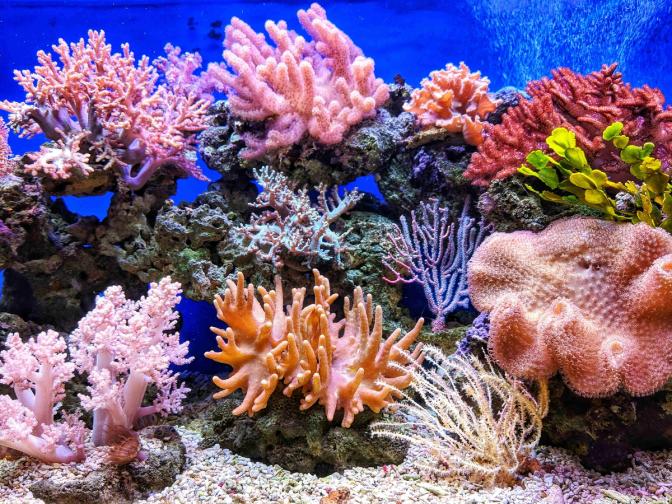
Next, we venture to Australia, where, beneath the turquoise waters of the Coral Sea, lies the Great Barrier Reef. This spectacular chasm is home to the world’s largest coral reef system and one of Earth’s richest ecosystems. Stretching over 2,300 kilometres along the country’s northeastern coast, this vibrant underwater world plays home to more than 1,500 species of fish, 400 types of coral, and an incredible array of marine life, including sea turtles and reef sharks.
A UNESCO World Heritage Site, the reef is both a symbol of natural wonder and a stark reminder of environmental fragility. Its kaleidoscopic corals and thriving biodiversity make it a paradise for divers and snorkellers, while ongoing conservation efforts aim to protect it from climate change and pollution. The Great Barrier Reef is a living, breathing ecosystem, one that helps us understand better the interconnectedness of life beneath the waves.

Harbour of Rio de Janeiro, Brazil
Framed by dramatic granite peaks and lush forests, the Harbour of Rio de Janeiro in Brazil, also known as Guanabara Bay, is one of the most stunning natural harbours in the world. Formed by the erosion of the surrounding mountains, the bay’s entrance is guarded by the iconic Sugarloaf Mountain, while the statue of Christ the Redeemer, which we discussed in our previous blog, overlooks from above, embracing the city and sea in one of the world’s most unforgettable panoramas.
Discovered by Portuguese explorers in 1502, the harbour has since become the lifeblood of Rio, blending natural beauty with vibrant urban life. Its shimmering waters, backed by the rhythm of samba and the energy of the city, capture Brazil’s spirit, which is in equal parts wild, colourful, and full of life. The Harbour of Rio de Janeiro is a geographical and cultural wonder, embodying the harmony between land, sea, and humanity.


Mount Everest, Nepal and Tibet
Probably the most iconic wonder on this list, and rising to 8,848 metres above sea level, Mount Everest is the highest point on Earth. To those who decide to climb it, it is a test of human endurance, and to everyone else, it is a beautiful symbol of nature’s grandeur. Situated on the border of Nepal and Tibet, this colossal peak dominates the Himalayan range, its snow-capped summit piercing the clouds and drawing adventurers from around the world.
For centuries, Everest has been revered by local Sherpa communities as Chomolungma, “Goddess Mother of the World.” Its slopes have challenged and claimed the lives of many who sought to conquer it, transforming it into a metaphor for ambition and perseverance. The climb to its summit demands physical strength, mental resilience, and respect for nature’s power, yet even those who simply gaze upon Everest from afar cannot help but feel its magnetism. This is a mountain that truly embodies the meaning of “wonder.”


Parícutin, Mexico
Unlike any other wonder on the list, Parícutin is a volcano whose birth was witnessed by humans, and not that long ago. In 1943, a farmer in Michoacán, Mexico, watched as his cornfield began to crack and smoke, and within days, molten lava erupted from the ground, giving birth to a new volcano. Over the next nine years, Parícutin grew to more than 1,300 feet tall, engulfing nearby villages in ash and lava, before finally going dormant.
Today, Parícutin stands frozen in time, a stark reminder of the Earth’s immense power and unpredictability. Visitors can now hike across its solidified lava fields, where church spires peek eerily through the volcanic rock, becoming remnants of a world reshaped by nature. Parícutin is an unusual wonder, representing both destruction and creation. It is somewhat of a living classroom on the geological forces that continue to sculpt our planet.


Victoria Falls, Zambia and Zimbabwe
Straddling the border between Zambia and Zimbabwe, Victoria Falls is one of the most dramatic waterfalls on Earth. Known locally as Mosi-oa-Tunya, “The Smoke that Thunders”, the falls span over 1,700 metres and plunge more than 100 metres into the Zambezi Gorge, sending up a mist that can be seen from miles away. When visiting this famed site, you’d better be prepared to get wet, as there is no escaping the spray that emanates from this enormous natural faucet.
Discovered by Scottish explorer David Livingstone in 1855, whose namesake is now given to a city in the Southern Province of Zambia that borders the falls, Victoria Falls remains one of Africa’s greatest treasures. Its thunderous roar, rainbows forming in the mist, and the surrounding rainforest ecosystem create a sensory experience unlike any other. The sheer scale and power of the falls leave visitors awestruck on every encounter, becoming a powerful reminder of nature’s raw and untamed majesty.


The Legacy of the Natural Wonders
The Seven Natural Wonders of the World remind us that not all miracles are man-made. They inspire humility, spark curiosity, and connect us to the forces that have shaped Earth long before humanity’s arrival.
In the final chapter of our series, which will be released next month, we’ll look to the future, exploring some of the incredible things that have not quite made a Wonders of the World list just yet.